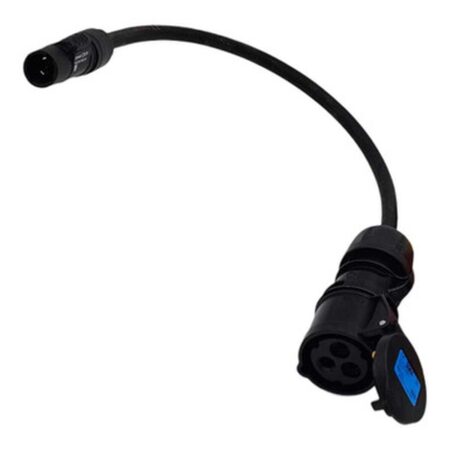
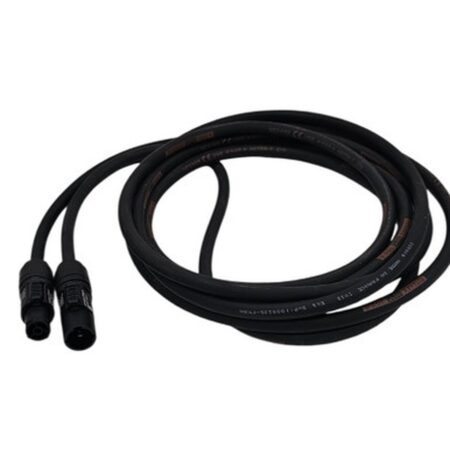
Event power cables carry electricity from a suitable supply or distribution unit to sound, lighting, video, catering and other event equipment. They are power connections, rather than audio or data cables. The required leads depend on the equipment and the temporary electrical system planned for the venue.
Event power planning starts with the equipment and the venue, not simply the length of an extension lead. A small indoor presentation, an outdoor stage and a catering pitch can need very different connections. This guide helps you put together a useful cable specification before you order.
Start with a power schedule
List the equipment for each area: sound, lighting, video, catering and any supporting services. Record the input connection and electrical requirements from each item’s documentation. Give this list to the person responsible for the temporary electrical system; a list of plug sizes alone is not a distribution design.
HSE’s event guidance covers supply capacity, generators, earthing, weather exposure and safe cable routes. It also points organisers to BS 7909 for temporary electrical systems. Have a competent event electrical contractor establish the supply and protection arrangements.
Specify both ends of every lead
For each cable run, write down the source outlet, the destination inlet and the required route length. Photograph the connector markings if the identification is unclear. Match voltage, current rating, pin arrangement and the equipment manufacturer’s requirements.
- 16A extension leads and 32A extension leads: compare the individual assembly specification with the planned circuit.
- PowerCON TRUE1 connections: check the exact connector family and the equipment inlet; similar names do not establish compatibility.
- Distribution boxes: select against the contractor’s distribution schedule, including the required input, outputs and protection.
Plan for the route and the weather
HSE recommends routing cables to reduce trip hazards and mechanical damage, protecting crossings where needed and selecting equipment suitable for the conditions. Include these requirements in your cable order. The shortest straight-line distance across a venue may not be the usable cable route.
Tell us whether a lead will serve a sheltered control position, an exposed stage or a mobile setup. Check the complete assembly’s stated environmental rating, including its connectors and the conditions in which that rating applies.
What to send with an enquiry
- The equipment list and the electrical contractor’s cable schedule.
- Clear photographs of the supply outlets and equipment inlets.
- Required lengths measured along the planned routes.
- Any specified cable type, connector family or labelling requirements.
- Whether the order is for one event or a repeat touring configuration.
For generator-fed systems, also read Generator Hookup Leads. Our industrial connector guide helps with connector terminology.
Common questions
Can an adapter provide a larger supply?
No. A different connector does not increase the available supply capacity. Have the complete arrangement specified for the equipment and protective devices involved.
Can MotorCables help identify a connector?
Use Ask Ashford to explore the range. For a custom assembly, send connector markings, photographs and your specification through our contact form.
Further guidance
HSE: Electrical safety at events. This buying guide supports product selection; it does not replace temporary electrical system design, inspection or testing.
Internet for mobile units and touring teams
Planning connectivity alongside your power supply? Read our Starlink guide for motorhomes, catering vans and touring crews for Mini setup, personal and business plan distinctions, customer Wi-Fi, POS connections and paid Standby Mode.